Supported Accommodation

Supported Accommodation

Advantage Planning.
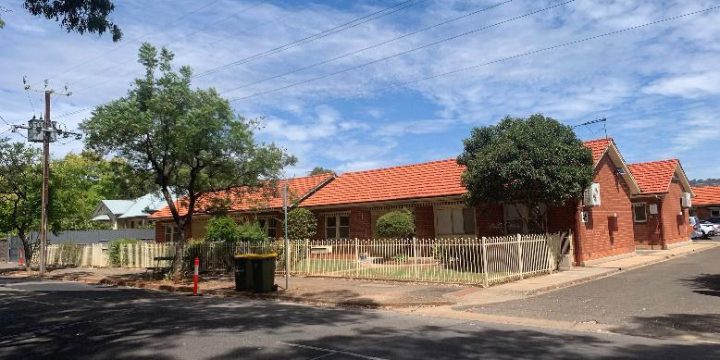
This description can range from support to stay in your own home so you can continue living ‘independently’. At the other end of the spectrum, it can mean specialist housing for high needs (SDA) or group homes (SRF’s) offering meals/care designed for people with disabilities /and or mental health issues and at risk of homelessness. Like with support for people to remain living independently in their own home the SRF accommodation is helping people to live independently with tailored support like personal care, skills training and case management. I was recently involved in changing the use of a group of former age care home units to supported accommodation specifically for people with disabilities and mental issues. Initially the home units (constructed in the 1960,s) needed to be update from a…

Read More
TOWN PLANNING CONSULTANT – ADVANTAGE PLANNING SERVICES

TOWN PLANNING CONSULTANT – ADVANTAGE PLANNING SERVICES

Advantage Planning.
We offer a fully range of Town Planning Services Particularly we specialise in: Feasibility advice on development potential with reference to the Planning and Design Code Change of Use Development Applications (DAs) Representations or response to Representations Lodgement of DAs with PlanSA Council Assessment Panel attendance Advice concerning land division potential Expert Town Planning Witness Environment Resources and Development Court (ERD) Planning Reports Code Amendment investigations New development DAs (including multi-storey buildings) Restricted development DAs Attendance at ERD Compulsory Conferences The specialties listed above are some of the more common reasons we would provide Town Planning professional services. But there are numerous other roles that Planning Consultants can undertake.
Read More
“Securing Planning Approvals for Self-Improvement Facilities in Adelaide”

“Securing Planning Approvals for Self-Improvement Facilities in Adelaide”

Advantage Planning.
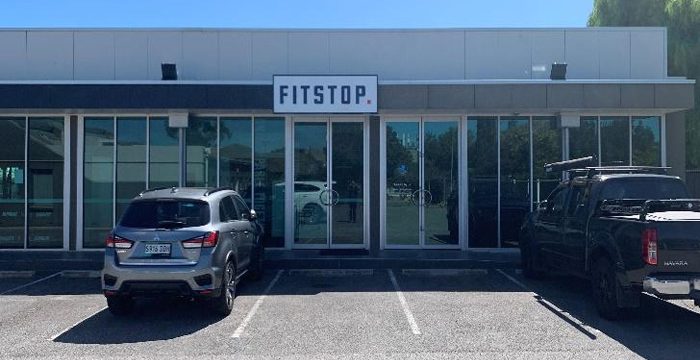
It has been a pleasure obtaining Planning Approval for a number of self-improvement premises throughout Metropolitan Adelaide in recent years. Including numerous Gymnasiums, Pilates studios, Modern Funk Dance, Pole Dancing Boutique and a Taekwondo martial arts. Its been rewarding getting approvals for these self-improvement premises that will develop people skills, health and fitness. But in nearly every case there have been on site car parking shortages, noise/acoustic issues and even soil contamination claims. All of which we resolved before approval could be granted.
Read More

Child Care Centres

Advantage Planning.
There are still small kindergartens and child care centres dispersed throughout the Adelaide metropolitan area often in refurbished former houses. But in more recent years large often two storey child care centres ‘Early Learning Centres’ are being purpose built usually in or on the fringe of residential zones. These relatively large two storey child care centres can accommodate more than  100 children from babies to preschoolers and are open from 6.30 am to 6.30 pm. The centres are much larger than the surrounding residential buildings, they operate for different trading hours than the 7am-9pm that is usually considered maximum hours for small commercial uses such as shops, offices or consulting rooms. In residential zones the size of commercial land uses is very restricted in floor area and scale. But these…
Read More

Site Contamination and the EPA

Advantage Planning.
Soil contamination issues have complicate a number of development applications I have been involved with over the years. In most instances they have been former service stations and /or fuel depots. Therefore contamination of the surrounding soil and/or ground water has mostly occurred from the leaking of fuel tanks when in use or because they have been left in the ground without being properly decommissioned. In other instances there has been suspected contamination by a former land use, but mostly these have not proved to be significant because the land use proposed is not considered a more sensitive land use than the previous land use. This has been established after extensive discussions with the Council Planner and reference to the Planning, Development and Infrastructure Act 2016. The land use Sensitivity…
Read More

Uniformity in Planning

Advantage Planning.
A positive benefit of traveling is recognizing what is good in other urban environments as well as our own. In the Greek Islands an impressive aesthetic is created by the all white square and rectangular buildings with flat roofs. Similarly in Paris, France the older parts of the city are characterised by 5-6 storey building that permit good light penetration and ventilation at street level. The same can be said for the impressive boulevards lined with pleached trees and orderly buildings. Adelaide may not be as exotic as these locations but in the inner suburbs where the original bluestone and sandstone villas have been retained the streetscapes have a pleasing urban form and rhythm. The present Planning and Design code for South Australia requires town planners to encourage uniformity and order. Generally houses are required to be setback’s…
Read More

WHY ENGAGE A TOWN PLANNING CONSULTANT

Advantage Planning.
People can be reluctant to engage a Town Planning Consultant whether they think they can represent themselves or possibly think engaging a consultant will be too expensive. In my 40 years working as a Town Planner both in Local Government, State Government and as a private planning consultant I would have to say these opinions could be rather short sighted. In many instances like non-complying land uses under the former Development Act or now restricted development with the new Planning, Development and Infrastructure Act it is really mandatory to have representation of a qualified Planner. A Town Planner has the experience and ability to represent the client properly and develop a cognisant argument why non-complying or restricted development should be allowed when it is specifically stipulated that what is proposed…
Read More

Home Activity

Advantage Planning.
The Development Regulations 2008 and superseding Planning, Development and Infrastructure (General) Regulations 2017 define a Home Activity with reference to the current Regulations: Home activity means a use of a site by a person resident on the site - (a) that does not detrimentally affect the amenity of the locality or any part of the locality; and (b) that does not require or involve any of the following: (i) assistance by more than 1 person who is not a resident in the dwelling; (ii) use (whether temporary or permanent) of a floor area exceeding 30 square metres (iii) the imposition on the services provided by a public utility organisation of any demand or load greater than which is ordinarily imposed by other uses of the services in the locality (iv)…
Read More

Some observations about energy efficient Building Design in South Australia

Advantage Planning.
There could be more in the Planning and Design Code that specifically encourages energy efficient building design. The current trend for extensions, ensuites and new roofs to be clad in black colorbond or steel sheeting is architecturally fashionable but from an environmental point of view is less desirable. The colour black absorbs heat more readily than lighter colours, white or natural silver (zincalume or galvanised steel) actually reflects light and absorbs less heat. Noticeably in more recent times eaves on houses and buildings are making a come back. Villas and bunglows from the late 1800s into the 1930s had extensive eaves and verandahs practical additions to houses in our hot Australian climate.  In the 1940 -1980s the prominence of eaves declined substantially and verandahs often became little more than small…
Read More
Planning and Design Code Heritage Area Overlays

Planning and Design Code Heritage Area Overlays

Advantage Planning.
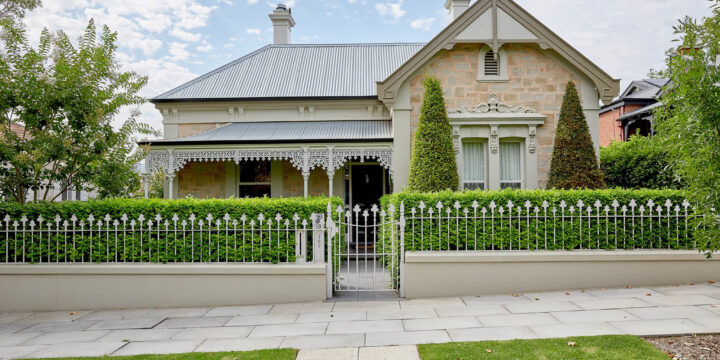
State and Local Heritage Places are still individually identified as was the case with the previous Development Act 1993 and respective Council Development Plans. The main difference with the new Planning and Design Code is the creation of Historic Area Overlays. No longer are individual Contributory and/or Non-Contributory items identified within the Historic Area Overlays.  There is now only reference to Representative Buildings that display attributes of a Historic Area as listed in the respective Historic Area Statement. This includes reference to matters such as architectural style, detailing, built form features, and building height. The respective Historic Area Statement nor Heritage Area Overlay makes specific mention of representative buildings nor buildings that contribute or detract (non-contributory) to the area streetscape mislead, there are general statements as follows: Buildings and structures,…
Read More